

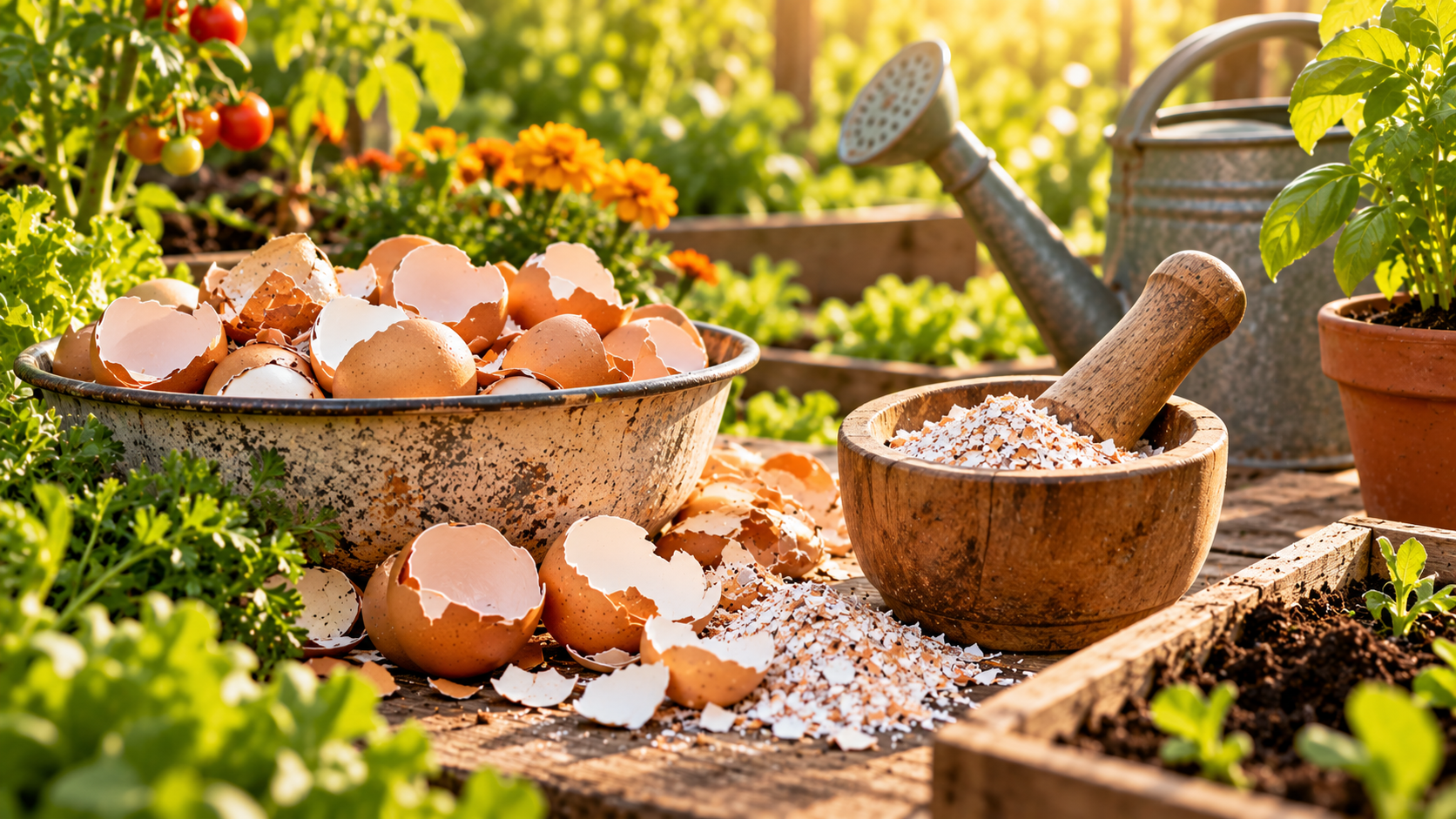
Egg Shells
Crack them. Save them. Put them to use.
Egg Shells
Don't Throw Them Away — Put Them to Use
Egg shells are another everyday kitchen item that can be given a second life.
They contain calcium carbonate and can be put to use throughout the garden — from the compost heap and seedling pots to tomatoes, citrus trees and potted plants.
Egg Shells in the Garden
Save Your Boiled Egg Water
Cooking boiled eggs? Don't throw the water away.
During cooking, calcium from the egg shells leaches into the water.
Once you've removed the eggs, keep the cooking water and allow it to cool completely.
The cooled water can then be used around plants showing signs of calcium deficiency.
Slugs
Broken egg shells can be scattered close to the stems of plants.
The original Earthkeepers method uses the sharp edges of the broken shells to help discourage slugs from reaching the plant.
Ants
Crush egg shells and place a thick layer close to the stem of the plant.
This can help reduce ant trails travelling up and down the plant.
A few drops of vegetable oil can also be stirred through the crushed shells.
More Ways to Use Egg Shells
Add Them to the Compost
Crushed egg shells can be added directly to the compost heap.
This is a simple way of returning the shells to the garden rather than throwing them away.
Make Egg Shell Seedling Pots
Egg shells can even become tiny biodegradable pots for starting seeds and cuttings.
Wash the egg shells in warm water and dry them.
Sit each shell inside an egg carton and fill it with potting mix.
Add a seed or plant cutting.
When the seedling is ready, the egg shell pot can be planted directly into the garden.
As the shell breaks down, it returns nutrients to the soil.
Egg Shells for Your Plants
Blossom End Rot
The original Earthkeepers article recommends adding dry, crushed egg shells to the soil where calcium deficiency is a concern.
Blossom End Rot Treatment
Combine:
1 tablespoon dried powdered egg shell
1 tablespoon white vinegar
Allow the mixture to sit for 30 minutes. It will foam as the vinegar reacts with the shell.
Then add:
5 litres of water
Stir thoroughly.
Earthkeepers uses this mixture around:
Tomatoes
Zucchini
Melons
Squash
Peppers
Potted Plants
Place a layer of crushed egg shells underneath the top layer of soil in your pot.
Water well.
As the shells gradually break down, they become part of the soil.
Tomato Food
Allow your egg shells to dry completely before crushing or grinding them into a powder.
Sprinkle the crushed shell around your tomato plants.
Cover with a light layer of:
Potting mix
Compost
or
Mulch
Egg Shells & Coffee for Citrus Trees
Egg shells and used coffee grounds can be combined around citrus trees.
Scatter two handfuls of finely crushed egg shells around the base of the citrus tree.
Then add two handfuls of used coffee grounds.
Using your fingers, lightly rake the mixture into the soil.
Water well.
Preparing & Drying Egg Shells
Drying egg shells makes them much easier to crush or grind into powder.
How to Dry Them
Rinse the egg shells.
Place them into a baking dish.
Heat the oven to:
180°C conventional
or
160°C fan-forced
Place the shells into the oven for approximately 15–30 minutes.
Once completely dry, they can be crushed or ground into powder ready for use.
Around the Home
Brightening Clothes
The original Earthkeepers method uses powdered egg shells in the washing machine.
Place powdered egg shells into a small gauze bag and fasten it securely.
The bag can then be placed into the wash to help brighten clothes.
Making the Most of Egg Shells
Something as ordinary as an empty egg shell doesn't necessarily need to end up in the rubbish.
From seedling pots and compost to tomatoes, citrus trees and potted plants, egg shells can be returned to the garden and given another purpose.
It's another simple example of the Earthkeepers philosophy — use what you have and waste as little as possible.
Continue Exploring
Coffee
Banana Skins
Back to Helpful Hints
For the hero image we just created, I'd put: