

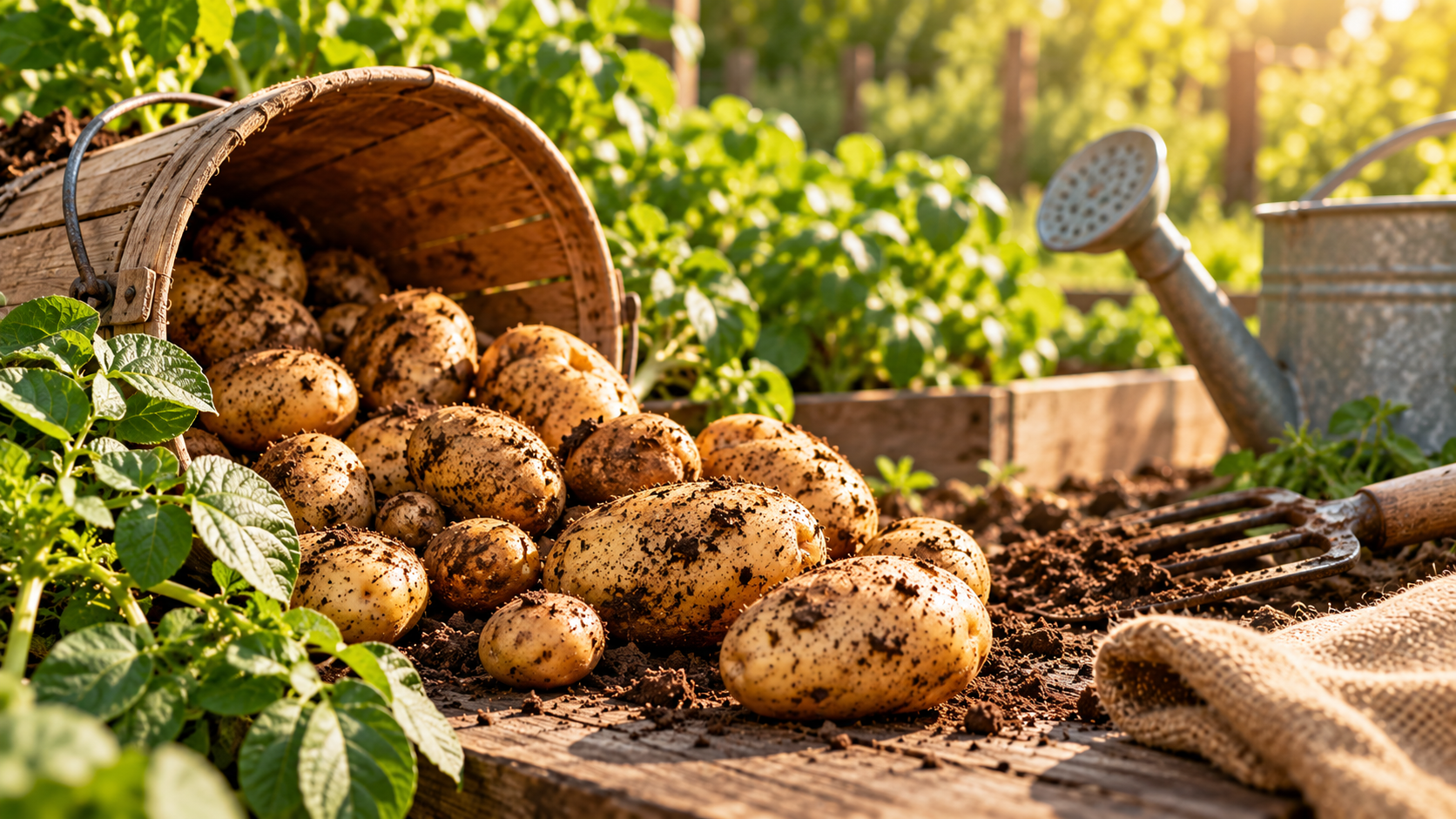
Potatoes
The humble potato. More useful than you think.
Potatoes
The Humble Potato Has More Uses Than You Might Think
Potatoes have been valued for generations, but their usefulness extends well beyond the kitchen.
At Earthkeepers, potatoes — and even the water left after cooking them — can be put to use around the home and garden.
Before tipping potato water down the sink, you may want to think twice.
Around the Home
Tarnish & Cloudiness Remover
Potato water can be used to help clean tarnished or cloudy items.
Place the items into a bowl of potato water and allow them to soak for a while.
Remove and rub with a dry cloth.
Windows & Eyeglasses
Cut a raw potato and rub it over the surface of a window or your eyeglasses.
Finish by wiping the surface with a clean, dry cloth.
Carpet Stains
Grate a potato and place the shavings into a cotton sock.
Allow the potato to sit inside the sock for approximately one minute.
Place the sock onto the stain for another minute before using it to gently scrub the area for a few minutes.
Finish by wiping the carpet with a warm, damp cloth.
Cleaning Burnt Pots & Surfaces
The water left after cooking potatoes can also be put to use as a cleaning agent.
Earthkeepers uses hot potato water to help clean burnt pots and burnt areas on glass stovetops.
It can also be used to wipe dull linoleum or vinyl flooring.
In the Kitchen
Bread Making
Instead of discarding your potato water, add it to your bread dough mixture.
At Earthkeepers, potato water is used to help bread stay fresh for longer.
Too Much Salt?
If you've accidentally added too much salt to pasta water, soup or sauce, add a few thick pieces of potato while it cooks.
Remove and discard the potato pieces when cooking is finished.
More Uses Around the Home
Give Old Shoes New Life
Rub a raw potato over an old pair of shoes.
Wipe away any residue and then polish the shoes as usual.
Removing Stains from Hands
Ink and strongly coloured foods such as beetroot and turmeric can leave stains on your hands and nails.
Cut a potato in half and rub the cut surface firmly over the stained area.
Rinse your hands with lukewarm water and wipe dry.
Potatoes in the Garden
Potatoes and potato water can also be given another purpose outside the home.
Strawberry Garden
Allow unsalted potato water to cool.
At Earthkeepers, this water is sprayed over strawberry plants as part of their garden care.
Geraniums
Grate one medium-sized potato.
Place the potato shavings around the base of the flowering plant and cover them with a little soil or light mulch.
Aphids
Cook potatoes without adding salt and keep the cooking water.
Allow the water to cool completely before transferring it into a spray bottle.
At Earthkeepers, this is sprayed onto plants as an organic method for discouraging aphids.
Rusty Garden Tools
Place some salt onto a small plate.
Cut a potato in half and dip the cut side into the salt.
Rub the potato over rusty areas of your garden tools.
Rinse the tools and wipe them dry using an old piece of towelling cloth.
How to Store Potatoes
Knowing how to store potatoes properly helps you make the most of your harvest and reduce waste.
Keep Them Cool & Dark
Store potatoes in a bag in a cool, dark place below room temperature.
Earthkeepers recommends avoiding refrigerator storage for raw potatoes.
Cooked potatoes can be kept in the refrigerator for several days.
Keep Potatoes Away from Onions
Don't store potatoes alongside onions.
The original Earthkeepers guidance recommends keeping the two separate because storing them together can contribute to deterioration.
How Long Will They Keep?
When stored correctly, mature potatoes can keep for several months.
New potatoes are much more perishable and generally keep for only one to two weeks.
Storing Home-Grown Potatoes
Don't wash freshly harvested potatoes before putting them into storage.
Instead, use an old piece of towelling cloth to gently remove any soil.
Take care not to damage or break the skin.
Once cleaned, place the potatoes somewhere cool and dark.
Making the Most of the Humble Potato
The potato is a perfect example of the Earthkeepers approach to making the most of what we already have.
The potato itself can be eaten, scraps can have another purpose, cooking water can be reused and even an ordinary raw potato can become useful around the home and garden.
Sometimes the simplest things are the most versatile.